The next generation of metabolic and fat-loss research: helping the body burn fat, use energy, and improve metabolic health.
Not an official chemical nameTargets GLP-1 · GIP · Glucagon receptorsLead compound in Phase 3 trials
Imagine a peptide that works with three different metabolic signals to help the body manage appetite, regulate blood sugar, and use stored fat for energy.
That's the science researchers are exploring with GLP-3.
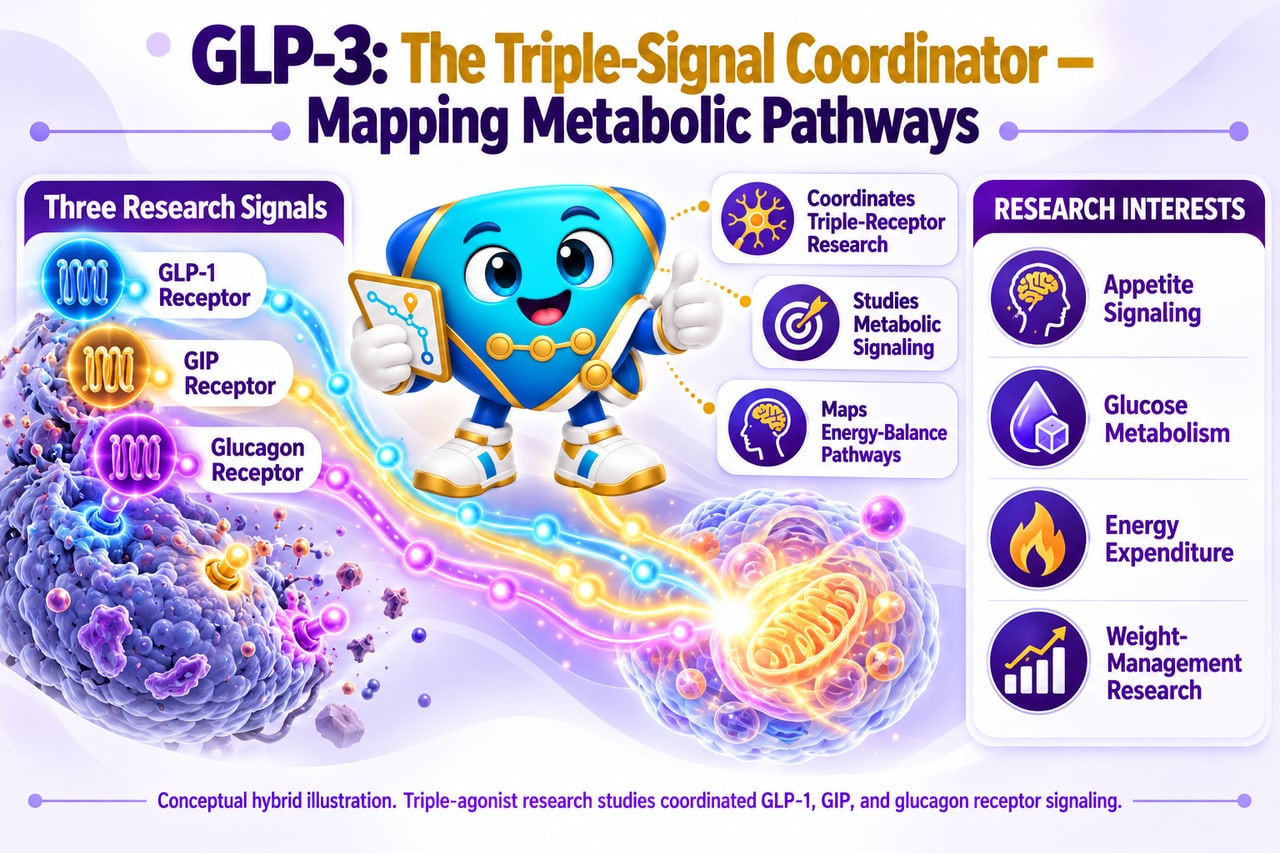
GLP-3 is our Peptide Curious nickname for a class of compounds called triple hormone receptor agonists. These compounds activate three important receptors: GLP-1, GIP, and glucagon.
Rather than focusing on just one metabolic pathway, they are designed to coordinate several processes that influence body weight, fat metabolism, and blood sugar regulation.
Conceptual overview. Triple-agonist research studies coordinated GLP-1, GIP, and glucagon receptor signaling — a simplified overview, not a clinical claim.
How GLP-3 May Help With Weight Loss
1. Helps the Body Use Stored Fat for Energy
One of the most interesting features of GLP-3 research is its effect on energy expenditure.
By activating the glucagon receptor, these compounds are being studied for their ability to increase how much energy the body uses.
In simple terms, the goal is to help the body become more efficient at using stored energy, including fat, rather than relying only on eating less to lose weight.
2. Supports Better Insulin Sensitivity
Insulin helps move sugar from the bloodstream into cells for energy.
When the body becomes insulin resistant, cells don't respond to insulin as effectively. The body may need to produce more insulin to manage blood sugar, and this can contribute to metabolic dysfunction and difficulty managing weight.
GLP-1 and GIP signaling influence insulin secretion and blood sugar regulation. Researchers are studying how activating these pathways together may improve glucose control and overall metabolic health.
Better insulin regulation can help the body manage energy more effectively.
3. Helps Control Appetite and Food Intake
GLP-1 signaling plays an important role in appetite regulation and fullness.
These compounds are being studied for their ability to help people feel satisfied with less food, reduce hunger, and make it easier to maintain a calorie deficit.
This addresses one side of weight loss: reducing the amount of energy coming into the body.
4. Targets Multiple Metabolic Pathways at Once
This is what makes triple agonists particularly interesting.
GLP-1: Helps regulate appetite, fullness, and blood sugar.
GIP: Influences insulin response and glucose metabolism.
Glucagon: Plays a role in energy expenditure and fat metabolism.
Together, these three pathways are being investigated for their potential to help the body reduce excess weight while improving metabolic function.
What Has Research Found?
The leading compound in this research category is retatrutide.
In published Phase 2 research, retatrutide demonstrated:
Up to 24.2% average body-weight reduction after 48 weeks in adults with obesity.
Improved blood sugar control in adults with type 2 diabetes.
Significant reductions in liver fat in people with metabolic dysfunction-associated fatty liver disease.
These findings are particularly interesting because they suggest that the benefits may extend beyond the number on the scale.
Why GLP-3 Research Is Exciting
Traditional weight-loss approaches often focus primarily on reducing calories.
Triple-agonist research takes a broader approach by investigating how the body regulates hunger, insulin, blood sugar, energy expenditure, and fat metabolism.
The big idea? Instead of simply eating less, researchers are exploring ways to help the body regulate energy better, improve metabolic health, and use stored fat more effectively.
That's what makes GLP-3 one of the most interesting areas of emerging metabolic research.
Important research note: Peptide Curious is an educational resource. GLP-3 is our informal name for a research category, not an official compound name. Retatrutide is investigational and is not FDA-approved. Research findings do not establish that all triple agonists produce the same results or guarantee individual weight loss.
Keep exploring
MOTS-c — a different angle on metabolic and energy research
Peptide Curious provides educational and editorial content only. It is not medical advice and is not a substitute for a qualified healthcare professional. GLP-3 is discussed here as a research-class nickname for investigational compounds; content may describe emerging research not approved for clinical use.