The Sleep Signal
DSIP
A small brain peptide discovered in sleep research, still more mystery than proof.
9 amino acids
First isolated in 1977
Studied in sleep research

A small brain peptide discovered in sleep research, still more mystery than proof.
Sleep is not just the brain switching off. During the night your brain cycles through stages, including deep, slow-wave sleep, also called delta sleep, the stage most associated with physical restoration.
DSIP, short for delta sleep-inducing peptide, is a small peptide made of nine amino acids. It got its name in the 1970s, when researchers in Switzerland isolated it from the blood of rabbits during induced sleep and found that giving it to other rabbits was followed by more slow-wave brain activity.
That origin story made DSIP one of the first peptides to be linked to sleep. What scientists have debated ever since is whether it truly is a sleep signal.
Think of DSIP as a sleep-signal research peptide: the name says what researchers first hoped it did, and the work since has been about testing whether that is true.
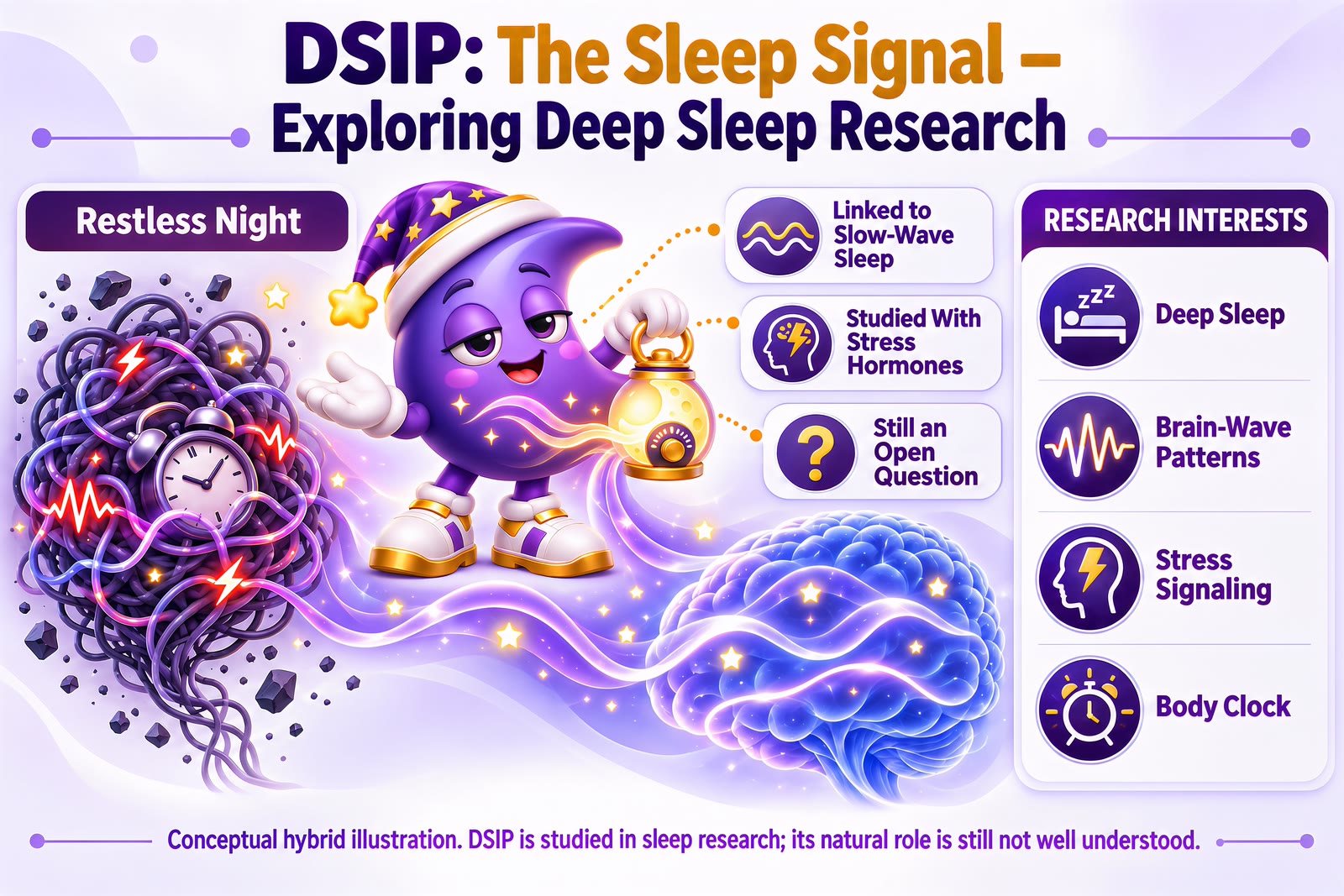
The original animal experiments looked at EEG recordings, the electrical rhythms of the brain, and reported more slow-wave activity after DSIP was given.
A handful of small human studies in the 1980s looked at people with insomnia. Some reported improved sleep, but the studies were small and the results were not consistent.
Researchers have looked at whether DSIP is connected to the body's stress-hormone signaling, since poor sleep and stress often go hand in hand.
Early studies also explored DSIP in relation to pain signaling and temperature regulation. Findings varied from one study to the next.
Despite its name, scientists have never fully agreed on what DSIP does in the body.
That is why DSIP is best described as an open question in sleep research rather than a proven sleep peptide.
DSIP was first described in 1977 by Swiss researchers (Schoenenberger and Monnier). A detailed scientific review followed in 1984, and research continued through the 1980s.
Interest has been quieter in the decades since, and no large modern trial has settled the question.
DSIP is not FDA-approved as a medication in the United States or approved for any medical use. It remains a research compound.
DSIP is a small, nine-amino-acid peptide with a clear origin story in sleep research, a handful of small early studies, and many unanswered questions.
The Peptide Curious takeaway: Think of DSIP as one of sleep research's open puzzles. It is interesting because of where it came from, not because it has been proven to do any particular thing.
Peptide Curious provides educational and editorial content only. It is not medical advice and is not a substitute for a qualified healthcare professional. DSIP is discussed here as a research/investigational compound; content may describe emerging research not approved for clinical use.