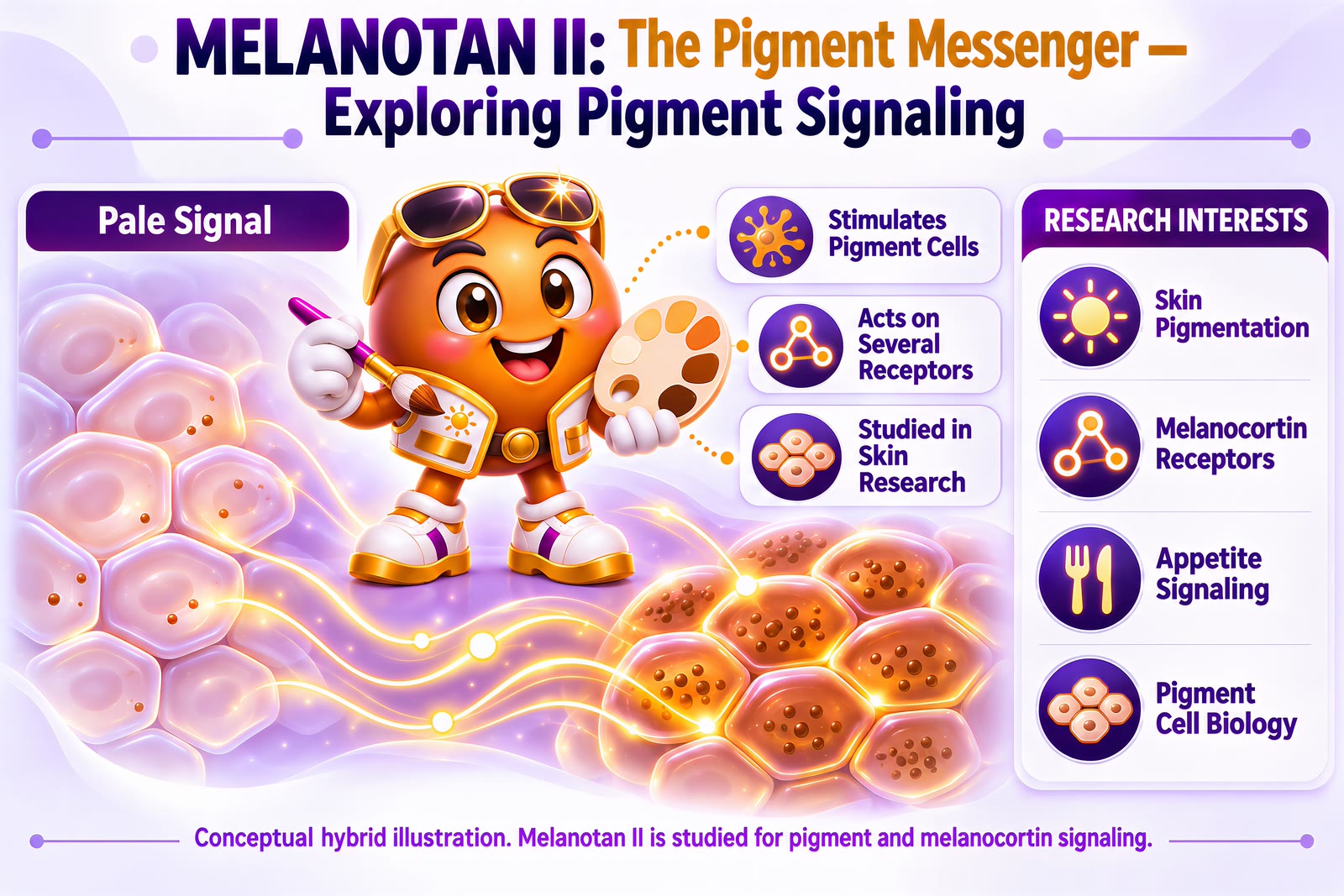
A powerful melanocortin peptide first studied for skin pigmentation and wide-ranging melanocortin signaling.
7 amino acids (cyclic)Alpha-MSH analogUniversity of Arizona research (1980s)
Melanotan IICharacter coming soon
The color of your skin is controlled by a pigment called melanin. Specialized skin cells make more melanin when they receive a signal from a natural hormone called alpha-MSH, which works through the melanocortin 1 receptor.
Melanotan II is a synthetic, ring-shaped (cyclic) version of alpha-MSH, designed in the 1980s at the University of Arizona. Researchers hoped that a longer-lasting version of the hormone might help protect skin from sun damage by boosting its natural pigment.
Think of Melanotan II as the alpha-MSH signal turned up and made to last longer. It is a broad signal, and that breadth is both what makes it interesting and what makes it controversial.
Conceptual overview. Melanotan II is studied for pigment and melanocortin signaling — a simplified overview, not a clinical claim.
How Melanotan II May Work
1. Stimulates pigmentation
Through the melanocortin 1 receptor, melanocytes make more melanin, which darkens the skin. This was the original goal of the research.
2. Acts on other melanocortin receptors
The same family of receptors is found in the brain and other tissues, where it helps regulate appetite, energy use, and sexual response.
Melanotan II is not selective: it activates several of these receptors. That is why researchers observed effects beyond skin color, including changes in appetite and sexual arousal.
3. Led to more targeted peptides
That wide-ranging activity is exactly why scientists went on to develop more selective melanocortin peptides: PT-141 (bremelanotide), which is studied for desire and arousal, and afamelanotide, a related peptide approved in the United States for a rare light-sensitivity condition called erythropoietic protoporphyria.
How Long Has Melanotan II Been Around?
Melanotan II has been studied since the 1980s. It was never developed into an approved medicine, and many of the products people encounter outside research settings are unregulated.
What about the United States?
Melanotan II is not approved as a medication in the United States or in other major markets.
The Bottom Line
Melanotan II is an influential compound in the history of melanocortin research. It helped scientists understand how this signaling system affects pigment, appetite, and sexual response, and it inspired more targeted peptides.
The Peptide Curious takeaway: Think of Melanotan II as the broad, powerful first draft of melanocortin science. It taught researchers a great deal, and its safety questions are still open.
Educational and harm-reduction note: Melanotan II is not an approved medicine, and its long-term safety has not been established. No tanning product replaces sun protection. Anyone who notices new or changing moles should see a dermatologist, and anyone considering a melanocortin peptide should speak with a qualified healthcare professional.
Keep exploring
PT-141 — the more targeted melanocortin peptide that grew out of Melanotan II
Peptide Curious provides educational and editorial content only. It is not medical advice and is not a substitute for a qualified healthcare professional. Melanotan II is discussed here as a research/investigational compound; content may describe emerging research not approved for clinical use.